
Prosecutors Consider Arrest as Former President Yoon Remains Behind Bars
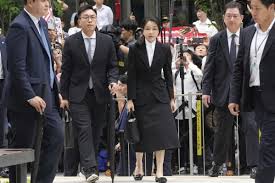
In an extraordinary turn of events that continues to rattle South Korea’s political and legal establishment, Kim Keon Hee, the former first lady and wife of impeached ex-president Yoon Suk Yeol, was formally questioned on Wednesday by prosecutors investigating stock manipulation, bribery, and political interference.
The interrogation began at 10:00 AM at the Special Prosecutor’s Office in Seoul, with a decision expected soon on whether to issue an arrest warrant—a move that, if granted, would make history. South Korea has never seen both a former president and first lady arrested.
Allegations That Rocked the Blue House
Stock Price Rigging and Luxury Bribes
Prosecutors allege that Kim colluded with traders to artificially inflate stock prices of a listed company between 2009 and 2012, enriching herself and others through illegal trading activity. The case, long whispered about in political circles, now appears to be coming to a legal head.
In addition to the market manipulation allegations, Kim is also accused of accepting bribes, including a US$2,200 Dior handbag, in violation of South Korea’s stringent anti-graft laws. The infamous handbag was allegedly gifted by a self-proclaimed fan in 2022, and the moment was captured on video, later leaked online—rekindling public outrage.
“A Person of No Importance” — Kim’s Public Apology
Before entering the Special Prosecutor’s Office, Kim addressed the media briefly, stating:
“I sincerely apologise for causing trouble despite being a person of no importance. I will cooperate fully with the investigation.”
While the tone was humble, the stakes are enormous—not only for her, but for South Korea’s perception of justice and accountability at the highest levels of power.
Crowds, Cameras, and Controversy
Supporters Rally, Critics Watch Closely
Kim’s appearance at the prosecutor’s office triggered a media frenzy. Her convoy was followed by reporters through the streets of Seoul, capturing every moment of her arrival.
Outside the compound, dozens of supporters of both Kim and her detained husband gathered with national flags and placards demanding impartiality. “Investigators must be fair,” one sign read, hinting at the growing perception among some conservative voters that the charges are politically motivated.
The Fall of Yoon Suk Yeol: A Cautionary Tale
From Prosecutor-President to Impeached Leader in Less Than Three Years
Kim’s legal woes are further complicated by the dramatic downfall of her husband, Yoon Suk Yeol, who once served as the nation’s top prosecutor and was elected president in 2022 on a platform of integrity and anti-corruption.
But Yoon’s presidency unraveled after he vetoed multiple parliamentary investigations into Kim’s alleged misconduct. Just days after rejecting the third investigation bill in late November, Yoon made the unprecedented move of declaring martial law, citing threats to national security—a decision that shocked the public and deeply fractured the political establishment.
His declaration briefly suspended civilian rule and was widely condemned as unconstitutional. Parliament quickly acted, overturning martial law, and by April 2025, Yoon was impeached and removed from office.
Legal Dominoes: What Comes Next for Kim?
Arrest Warrant Decision Looms
Prosecutors have indicated that an arrest warrant is likely, pending the outcome of Wednesday’s questioning. If approved, Kim could be taken into custody as early as this week.
Legal analysts say the prosecution is moving cautiously but deliberately, mindful of the historical implications and potential political fallout.
“South Korea has long tried to establish a precedent that no one is above the law—not presidents, not their families,” said Dr. Lee Hyun-joo, a professor of political science at Korea University. “But the arrest of both the former president and first lady would be an unprecedented moment of reckoning.”
More Than Just Finance: Political Meddling Allegations
In addition to financial misconduct, Kim is also under scrutiny for allegedly interfering in her husband’s party’s MP nomination process. This would represent a serious breach of South Korea’s election laws, particularly if she exerted influence over candidate selections without holding public office.
These allegations, long dismissed by conservative loyalists, gained new momentum after Yoon’s impeachment and the subsequent snap elections in June, which saw a sweeping victory for opposition parties.
Public Sentiment: Reform or Retaliation?
Public reaction to the investigation is divided. Some citizens view the prosecution as a long-overdue attempt to clean up elite corruption, while others see it as political score-settling after Yoon’s fall from grace.
Surveys conducted by Seoul Media Institute in July showed that 62% of respondents supported a full investigation into Kim, while 29% viewed the ongoing probe as politically motivated.
“There’s fatigue,” said Jeong Hae-min, a civil society activist. “The public is tired of scandals, but they’re even more tired of impunity.”
South Korea’s Political Climate: On the Brink or Beginning Again?
The saga of Kim Keon Hee and Yoon Suk Yeol is the latest in a long line of South Korean political scandals that have felled presidents and shaken institutions.
Yet, observers note that each episode has also strengthened the country’s commitment to democratic accountability.
As prosecutors prepare to potentially make history with the arrest of a former first lady, one question looms large: Will justice be served—or weaponized?