
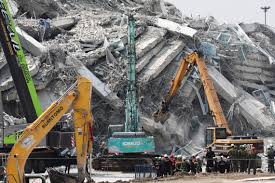
Tragedy Strikes During Earthquake: Nearly 100 Lives Lost
In one of the deadliest construction disasters in Thailand’s recent history, prosecutors have formally charged 23 individuals, including a high-profile Thai construction mogul and a Chinese state-owned enterprise, over the fatal collapse of a 30-storey building in Bangkok during a powerful earthquake on March 28, 2025.
The disaster claimed at least 95 lives, mostly construction workers, when the under-construction State Audit Office tower crumbled following tremors from a 7.7-magnitude earthquake centered in neighboring Myanmar.
Key Players in the Dock
Charges Filed Against Major Industry Names
The Office of the Attorney General (OAG) in Thailand confirmed today that the accused include:
- Premchai Karnasuta, President of Italian-Thai Development (ITD.BK)
- An executive from China Railway Number 10 (Thailand) Ltd, a subsidiary of China’s state-owned China Railway Group (601390.SS)
- 21 other individuals, including engineers and site supervisors
The accused are being prosecuted for:
- Violating Thailand’s construction and engineering regulations
- Causing death by negligence
- Forging official engineering documents (for some defendants)
These indictments follow a police investigation that began in May after initial arrests were made.
Collapse Triggered by Structural Failures
Earthquake Exposed Dangerous Shortcuts
While the tremor was strong, experts and structural engineers confirmed that it was well within the threshold that modern high-rises should be designed to withstand. The fact that the State Audit Office building was the only major structure to collapse in Bangkok has raised serious questions about the quality of construction.
Investigations revealed:
- Non-compliance with mandatory safety and structural standards
- Use of substandard materials
- Irregularities in engineering blueprints
- Possible cost-cutting measures to accelerate completion
These lapses have led to strong accusations of gross negligence and deliberate regulatory violations.
Silence and Denials from Corporations
Italian-Thai Development, one of Thailand’s largest and most influential construction conglomerates, has not responded to requests for comment. The company has faced previous controversies but has continued to win major infrastructure projects in Thailand and across Southeast Asia.
Likewise, representatives of China Railway Number 10 (Thailand) Ltd could not be reached for comment. However, a company official in May denied wrongdoing and pledged to cooperate fully with authorities.
Denials from Premchai and Co.
Premchai and 14 other defendants denied all charges during their arrest in May. Legal representatives claim that the building collapse was an unfortunate natural disaster exacerbated by unforeseen circumstances.
Legal Ramifications and Corporate Accountability
Harsh Penalties Possible
Under Thai law, if convicted, the accused could face:
- Multiple years of imprisonment for criminal negligence
- Hefty financial penalties
- Industry bans or revocation of operating licenses
Legal analysts suggest that the gravity of the collapse and public scrutiny may prompt the judiciary to pursue the case with unusual vigor.
Broader Implications for Thai Construction Sector
This case is expected to send ripples through Thailand’s booming construction and infrastructure sector. Key areas of focus include:
- Re-evaluation of safety compliance and oversight mechanisms
- Enhanced scrutiny of foreign joint ventures
- Potential reform of building codes and enforcement
Consumer advocates and civil society organizations are also calling for an independent audit of ongoing mega-projects, particularly those involving international partners.
Public and Political Reactions
Public anger remains high. Footage of the collapse, which circulated widely on social media, showed workers fleeing as the tower disintegrated into clouds of dust and debris. Many of the victims were migrant laborers from Thailand’s northern provinces and neighboring countries.
Human rights groups have demanded stronger protections for construction workers and greater transparency in the awarding of government contracts.
Politically, the scandal poses a challenge to Thai authorities under scrutiny for their cozy relationships with large conglomerates. Calls for regulatory overhaul are growing louder in the wake of the tragedy.
The Bangkok tower collapse has not only claimed lives but also shaken public confidence in Thailand’s construction industry. With prominent figures like Premchai Karnasuta facing serious charges and a major Chinese firm under the microscope, this case could mark a turning point for construction safety standards in the region.
All eyes will be on the Thai judiciary in the coming months as the trial proceeds. The outcome will likely determine whether justice can truly be served when powerful players are involved.