
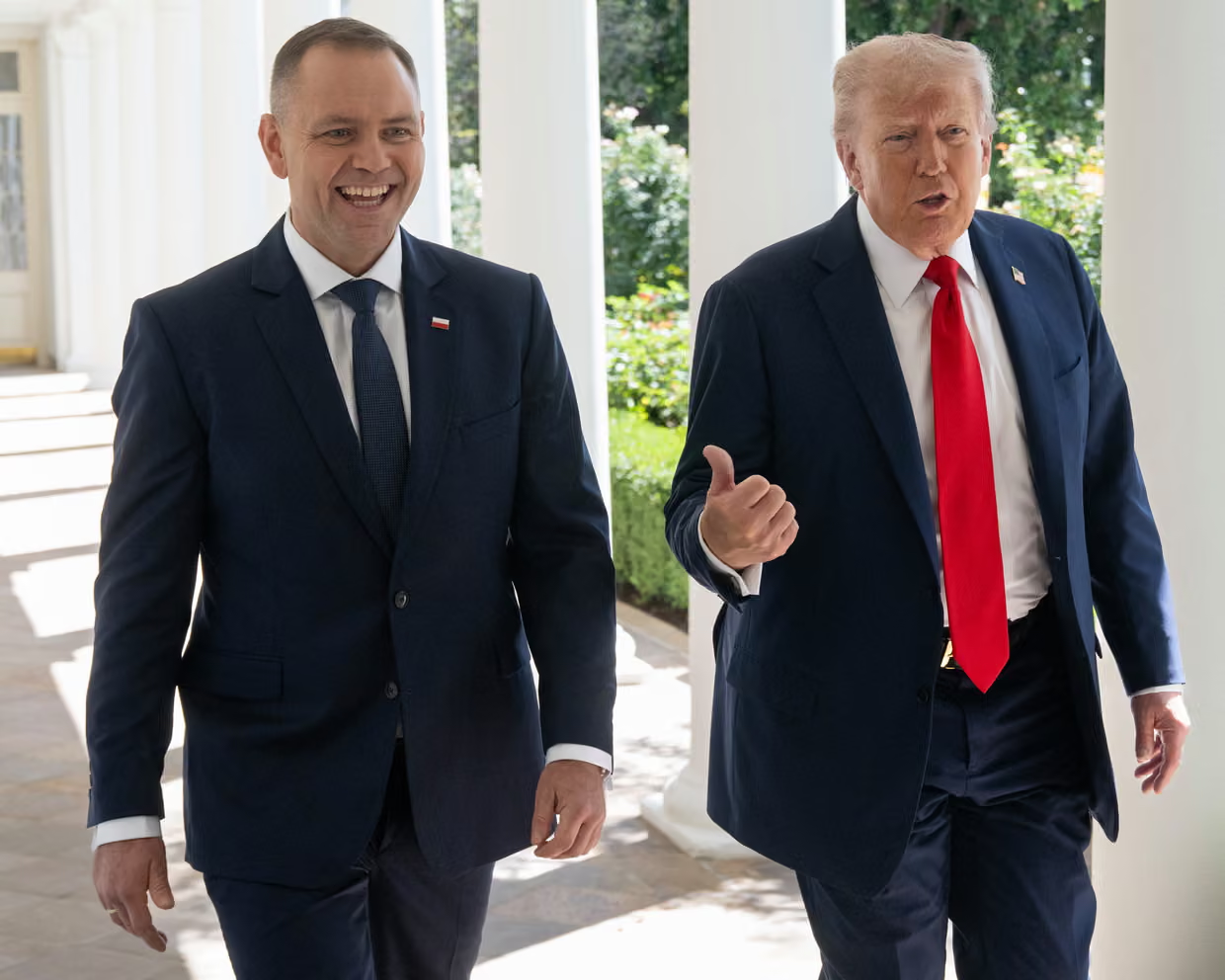
Former U.S. President Donald Trump once again underscored the significance of America’s relationship with Poland, vowing to “stand with Warsaw” while meeting Polish President Andrzej Duda for the first time since leaving office. The declaration came in a forceful and symbolic tone, reflecting Trump’s long-standing appreciation of Poland’s strength and strategic presence in European security.
Strengthening the U.S.-Poland Relationship
Trump’s words were delivered at a moment when international order is newly uncertain. The former president stressed Poland’s position as a “pillar of strength in Europe” and complimented its dedication to national defence. In past years, Trump frequently expressed admiration for Warsaw’s willingness to spend significantly on its own security and to fulfil NATO’s defence spending requirements. His recent words echo that story, placing Poland as one of Washington’s most dependable allies in Europe.
The gathering was a reminder of Trump’s foreign policy style, which tends to rely on powerful bilateral relationships more than large multilateral organisations. While critics say the approach will isolate allies, proponents say it provides clarity and respect between nations.
Poland’s Strategic Role in Europe
Poland holds a special place in Europe, both politically and geographically. Sharing a border with Ukraine and Belarus, the nation has turned itself into a frontline state against the changing security dynamics. As Russian actions in Eastern Europe have created concerns, Poland has been at the forefront of assisting Ukraine, spending on advanced military hardware, and urging greater Western cohesion.
Trump commended these efforts, claiming that Warsaw’s leadership “represents the true spirit of freedom and sovereignty.” By emphasising Poland’s defence spending, he bolstered the argument that more powerful allies lessen the financial and military workload on the United States, something that has remained the central tenet of his worldview.
Shared Values and Historical Bonds
Apart from defence and geopolitics, Trump invoked the cultural and historical ties between Poles and Americans. Polish Americans number in the millions and represent a thriving community in the U.S., sharing values of independence, religion, and democracy. Trump emphasised that the two countries’ alliance transcended treaties, instead being based on shared ideals and a shared commitment to oppose authoritarianism.
This tone really resonates with Poland, a nation that has survived occupations, wars, and communism but came out intact with its sense of national identity and faith in democracy. Trump’s tone echoed the history, presenting Poland as a nation whose bravery makes its allies around the world proud.
Political Implications of the Meeting
The scheduling of the meeting and Trump’s commitment have major political ramifications. In America, foreign policy credibility is a major discussion point ahead of the 2024 elections. By reaffirming its commitment to Warsaw, Trump presents himself as a leader who can negotiate global alliances.
In Poland, the trip solidifies Duda’s reputation as a president who can maintain good relationships with powerful world leaders. As Europe grapples with the future of its defence policy, especially with regard to NATO and the European Union’s position, Warsaw’s alliance with Washington is expected to be a pillar of regional stability.
Looking Ahead
Trump’s pledge to “stand with Warsaw” marks continuity in the U.S.-Poland relationship, irrespective of political changes. As the world grapples with shifting power centres, this reiterating of solidarity highlights the long-term significance of strategic alliances.
For Poland, reassurance from a global superpower at a time of uncertainty offers comfort. For Trump, it demonstrates his faith in bilateral diplomacy, wherein powerful leaders build personal relationships that define international relations.
As both politicians look to the future, the potential of cooperation means that U.S.-Poland relations will remain strong, based deeply on mutual security interests, cultural ties, and a shared determination to uphold democratic values.